Showing posts with label Flowers. Show all posts

Monday, 6 March 2017

Flowers are spelling it out...


"I often think flowers are the angels' alphabet whereby they write on hills and fields mysterious and beautiful lessons for us to feel and learn."


Beautiful sentiments from Louisa May Alcott (born 1832), who died on this day in 1888, aged 55. Author of Little Women (1868) Little Men (1871) and Jo's Boys (1886). She was also a transcendentalist, an abolitionist and a feminist.

She is buried in Sleepy Hollow Cemetery in Concord, near Ralph Waldo Emerson, Nathaniel Hawthorne, and  Henry David Thoreau. What a group of people! They are buried on a hillside now known as'Authors' Ridge'.


Wednesday, 8 February 2017

The Relevance of John Ruskin - on Nature


John Ruskin (1819-1900)


“Nature is painting for us, day after day, pictures of infinite beauty if only we have the eyes to see them.” 

“Sunshine is delicious, rain is refreshing, wind braces us up, snow is exhilarating; there is really no such thing as bad weather, only different kinds of good weather. ” 

“Remember that the most beautiful things in life are often the most useless; peacocks and lilies for instance.” 

"I will not kill or hurt any living creature needlessly, nor destroy any beautiful thing, but will strive to save and comfort all gentle life, and guard and perfect all natural beauty upon the earth."

"Mountains are the beginning and the end of all natural scenery." 

"The actual flower is the plant's highest fulfilment, and are not here exclusively for herbaria, county floras and plant geography: they are here first of all for delight."

"There is no climate, no place, and scarcely an hour, in which nature does not exhibit color which no mortal effort can imitate or approach. For all our artificial pigments are,even when seen under the same circumstances, dead and lightless beside her living color; nature exhibits her hues under an intensity of sunlight which trebles their 
brilliancy."

"I would rather teach drawing that my pupils may learn to love nature, than teach the looking at nature that they may learn to draw."

"It is written on the arched sky; it looks out from every star. It is the poetry of Nature; it is that which uplifts the spirit within us."

Thursday, 28 July 2016

In the Garden

The joy of gardening and how gardens are good for the soul.


I came late to gardening even though I have had a garden for most of my life.  It has always been like an extra room; a sitting room in summer and a spare guest room for the feathered visitors that come with winter days.  Although I have gained much pleasure from the garden, as with any other room in the house it must be kept tidy and maintained.  So for many years I viewed gardening as a necessary task until about ten years ago when I began to enjoy the weeding and planting, the digging, cutting and pruning.  What changed?  Due to stresses and pressures at work, I began to see the garden as a refuge, an escape, and I found myself enjoying the gardening as much as sitting and relaxing there.  How I ever saw gardening as a chore I now couldn’t understand.  I have always loved being outdoors and going into the garden means stepping out under the sky and into the air but most of all, it is offers a myriad of sensations to experience and enjoy.
 
When I’m just sitting quietly in the garden or doing some work there, the vibrancy and beauty of the red roses, the citrusy freshness of the lemon ones, the hum of the bees gathering the pollen from the foxglove bells, and the delicate scent of the honeysuckle on the warm air reach me and I receive them joyfully.  I watch the insects and the worms going about their lives and see and hear the birds in the branches above my head. I see and feel the textures of the different leaves and instinctively recoil my hand under the prick of the holly or sting of a nettle.  I feel the sun on my back or more often here in Cumbria, the soft rain gently patting my face!

Actively opening our five senses, keeping them ever alert to the sights, sounds, smells, tastes and textures that surround us constantly brings happiness and dispels those feelings of lethargy and boredom that can afflict us.  We live in an artificial world surrounded as we are by concrete, steel, pavements, covered shopping centres, paved driveways and nature is pushed further and further to the edges of our lives, physically and emotionally.

Sit or dig in a garden, walk in a park, observe pots of plants in yards and on balconies and really notice what is around.  Once we switch off the thoughts and concerns in our heads and open ourselves to experiencing the moment, our senses can hone in and pick up all the impressions and communication that nature is offering to us. A renewed sense of wonder is instilled as the natural world displays some of its beauty and diversity.  


I was wrong in thinking of the garden as an extension to the house, another room.  It is much more than that; it is a universe with a life and aliveness that infuses my being, renewing and invigorating the life within me. Utilising our senses fully means experiencing the world about us.  There is so much beauty and wondrous things happening all around us, how can we ever be bored?  


Friday, 16 October 2015

Oscar Wilde's Birthday

Oscar Wilde
(16 October 1854 - 30 November 1900)
 Irish playwright, novelist, essayist, and poet.


Oscar Wilde is famous for his plays, witticisms and some of his poems such as 'The Ballad of Reading Gaol.'  But there are other writings of his that are overshadowed by his more popular works.  He is associated is the drawing room and dinner party, social circles, but there was another side to him.  His love of nature comes across in this beautiful poem of his that I recently found and it has quickly become a favourite.

 We Are Made One with What We Touch and See 

We are resolved into the supreme air,
We are made one with what we touch and see,
With our heart's blood each crimson sun is fair,
With our young lives each spring-impassioned tree
Flames into green, the wildest beasts that range
The moor our kinsmen are, all life is one, and all is change.


With beat of systole and of diastole
One grand great life throbs through earth's giant heart,
And mighty waves of single Being roll
From nerveless germ to man, for we are part
Of every rock and bird and beast and hill,
One with the things that prey on us, and one with what we kill


One sacrament are consecrate, the earth
Not we alone hath passions hymeneal,
The yellow buttercups that shake for mirth
At daybreak know a pleasure not less real
Than we do, when in some fresh-blossoming wood
We draw the spring into our hearts, and feel that life is good


Is the light vanished from our golden sun,
Or is this daedal-fashioned earth less fair,
That we are nature's heritors, and one
With every pulse of life that beats the air?
Rather new suns across the sky shall pass,
New splendour come unto the flower, new glory to the grass.


And we two lovers shall not sit afar,
Critics of nature, but the joyous sea
Shall be our raiment, and the bearded star
Shoot arrows at our pleasure! We shall be
Part of the mighty universal whole,
And through all Aeons mix and mingle with the Kosmic Soul!


We shall be notes in that great Symphony
Whose cadence circles through the rhythmic spheres,
And all the live World's throbbing heart shall be
One with our heart, the stealthy creeping years
Have lost their terrors now, we shall not die,
The Universe itself shall be our Immortality!

Monday, 14 September 2015

Looking Out of the Window

What Life can compare to this?
Sitting quietly by the window,

I watch the leaves fall, 

And the flowers bloom, 
As the seasons come and go.
(Hseuh-Tou, 982-1052)

Wednesday, 15 July 2015

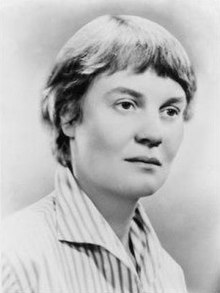
Iris Murdoch

Iris Murdoch.jpg 
Iris Murdoch, author and philosopher

born Dublin 15th July 1919 


 One of my favourite quotes from her -

 "People from a planet without flowers would think we must be mad with joy the whole time to have such things about us."  


Sunday, 12 July 2015

Books and Bees

“Handle a book as a bee does a flower, 
extract its sweetness 
but do not damage it.” 

John Muir